
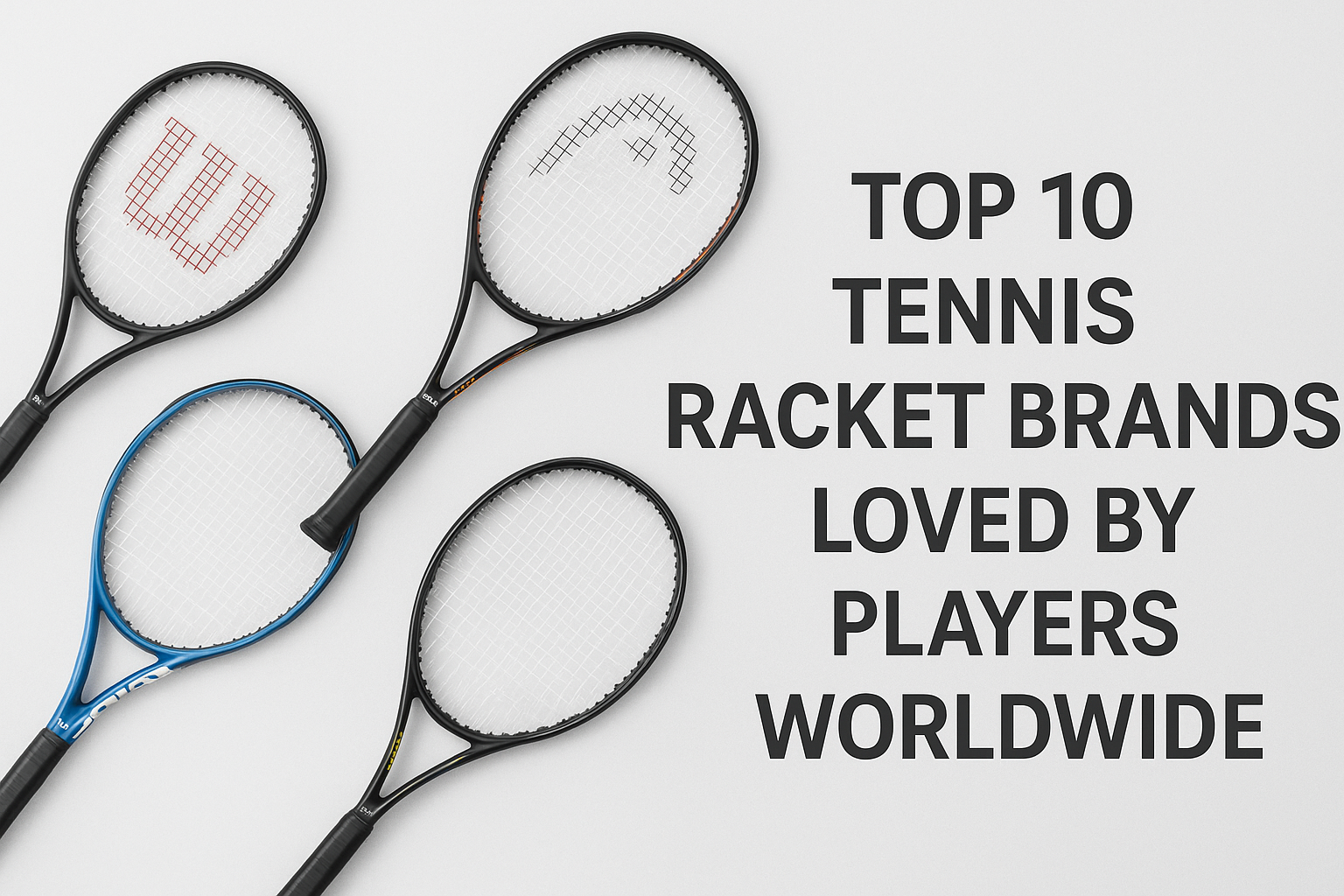

A lineup of modern tennis rackets from various top brands, illustrating design diversity.
Choosing the right tennis racket can dramatically impact a player’s game. Experts note that the racket you pick “influences everything from power and control to comfort and injury prevention”. Worldwide, certain brands consistently rise to the top in both amateur and professional play. For example, recent tour statistics show Wilson rackets in use by roughly 26–31% of top professionals, followed closely by Head (~24–25%) and Babolat (~20%). These brands – and others we’ll discuss – are loved globally for their technology, durability and player endorsements. In this guide, we rank the top 10 tennis racket brands and explain what makes each special, helping you find the racket that suits your style and level.
Top 10 Tennis Racket Brands
Below are the ten most popular tennis racket brands, each with a proven track record among players of all levels. For each brand, we highlight key features, famous rackets, and notable pros who use them.
Wilson
A century-old name in tennis, Wilson is the most-used racket brand on tour. Wilson tennis rackets are known for their balanced blend of power, control and comfort. The brand offers lines like Blade (for control) and Ultra (for power) with advanced materials and customization options. Many Grand Slam champions have used Wilson – for example, the Blade 98 (98 sq.in. head) is endorsed by Stefanos Tsitsipas and Milos Raonic, while the Pro Staff RF97 (Roger Federer’s iconic frame) remains popular among precision players. Wilson’s long history (founded 1913) and innovations (e.g. “3D Bending” frame technology) have won over beginners and pros alike. (For gear info, see Wilson tennis rackets.)
Head
Head is a leading Austrian brand prized for cutting-edge tech and pro endorsements. Head pioneered the oversized racket in the 1970s and has since sponsored stars like Novak Djokovic and Alexander Zverev. Head racquets (Speed, Radical, Gravity series) are engineered for control and spin: for instance, the Head Speed Pro is Djokovic’s choice. Tour data show Head ranks a close second in pro usage, with about 24–25% of top players. Its innovative materials (Graphene in frames) add stability, while models like the Radical MP (used by Taylor Fritz) are known for versatility. Head rackets balance comfort and power well, making them favorites from the recreational to elite level.
Babolat
Founded in 1875, Babolat is famed for high-spin, power-oriented rackets. A French brand now beloved worldwide, Babolat was the first to popularize natural gut strings. Its Pure Aero line (Rafael Nadal’s racket) and Pure Drive series combine a large head and stiff frame to deliver explosive spin and pace.
In fact, the Pure Aero (100 sq.in.) is used by aggressive baseliners like Nadal and Carlos Alcaraz, emphasizing Babolat’s spin-friendly design. Babolat rackets are priced mid-to-high, reflecting quality construction (graphite frames, advanced Cortex dampening) that offers both power and a smooth feel. The brand’s focus on performance has made Babolat a top choice for players seeking forceful, accurate shots.
Yonex
Yonex, a Japanese company, is respected for precise engineering and a unique isometric head shape. Yonex rackets (EZONE and VCORE series) are known for combining power, control and feel. Top pros like Nick Kyrgios, Stan Wawrinka, and Naomi Osaka use Yonex frames, which feature technologies (e.g. Namd graphite layup) that maximize energy transfer. On tour, Yonex holds about a 10–15% market share. Models like the Yonex EZONE (endorsed by Casper Ruud and Denis Shapovalov) offer a plush feel, while the VCORE line is tailored for spin hitters.
Yonex rackets are also designed with very precise tolerances (many made in Japan), ensuring consistent balance and performance. Their modern designs and durability have made Yonex a fast-growing favorite among players of all levels.
Tecnifibre
Tecnifibre (France, est. 1979) has surged in popularity thanks to its modern rackets and players like Daniil Medvedev and Iga Świątek. Tecnifibre often tops “best rackets” lists: its TFight series balances stability, spin and control, while a lighter TF series offers maneuverability. Tecnifibre emphasizes innovative materials (e.g. proprietary carbon or tungsten blends) to yield durable yet powerful frames. Pro’s have endorsed it — Medvedev’s TFight 305S is a tour staple.
The brand’s carbon-fiber rackets provide an excellent touch without sacrificing strength, and many players (from club to pro) praise their consistent performance. As a result, Tecnifibre stands out for its quality craftsmanship and “tour-proven” designs.
Prince
Prince was a dominant tennis brand in the ’80s and ’90s. Founded in 1970, it introduced technologies like the high-tension glass (Kool fiberglass) and quickly rose to fame. In the past, champions like Andre Agassi, Maria Sharapova and the Bryan Brothers used Prince gear.
Today, Prince still offers quality rackets (Beast, Tour, Phantom lines) but its presence on tour has waned – the last top player using Prince was John Isner. Nonetheless, Prince remains beloved by many players for its comfortable feel and control. It was one of the first brands to cater to high-energy players, and its historical reputation endures: even novice players may pick a Prince for its forgiving sweet spot and classic design.
Dunlop
Dunlop (UK) dates back to 1889 and is famous for tennis balls and rackets. Legendary players like Rod Laver, Martina Navratilova, John McEnroe and Steffi Graf wielded Dunlop racquets, underlining the brand’s heritage. Modern Dunlop rackets (CX, CV, CZ series) offer great value: they use quality materials to give a solid feel without a premium price tag.
For example, the Dunlop CX 200 features a 100 sq.in. head and graphite frame, ideal for all-court players seeking a blend of power and comfort. Only a few pros now use Dunlop (around 3–4 on tour, e.g. Miomir Kecmanović), but the brand remains respected. Players often praise Dunlop’s stability and control, and its widespread availability makes it easy to find in stores. In summary, Dunlop rackets deliver “pro-quality” performance at a friendly price.
Völkl
Völkl is a German brand (origins in skiing equipment) that makes premium tennis rackets. Its frames are built with full carbon fiber and are lighter than many competitors. Völkl rackets (like the V-Sense V1 and Organix series) are known for exceptional comfort and touch. Former world #1 Boris Becker once used Völkl, giving it a pro legacy. Today, Völkl appeals to players who want precise feel and control – the brand emphasizes a crisp, connected “feel” on impact.
All Völkl rackets feature a relatively larger head size but lighter swing weight, so players enjoy stability without fatigue. The overall result is a racket that hugs one’s hand; many coaches recommend Völkl for players with arm issues. Its reputation for quality construction and user comfort keeps Völkl a top choice, especially in Europe.
Solinco
Solinco is a newer American brand, originally celebrated for high-performance strings. In 2022 Solinco launched its own rackets (Blackout and Whiteout series) focused on maximizing spin. The company’s lightweight frames and modern shapes aim to attract players who love aggressive, top-spin tennis. Early reviews note that Solinco rackets provide a lively feel and crisp feedback, thanks to the brand’s string expertise.
While Solinco has a tiny pro presence (none on the ATP 100 currently), it has quickly gained fan praise among club players looking for “spin rockets” at a moderate price. In essence, Solinco appeals to those chasing power/rotation – fitting for a top-10 list as a cutting-edge, up-and-coming brand.
Diadem
Diadem is another young American racket company (founded 2015) that has made waves through innovative design. Its first tennis lines (Elevate and Nova) focus on forgiveness and comfort – two Diadem rackets feature diagonal string intersections for an extra-large sweet spot. The brand’s styling is bold (bright colors), and they offer sponsorship savings to coaches and schools. As of 2025, Diadem sponsors WTA player Elina Svitolina and many collegiate athletes, a sign of growing respect.
Testers often praise Diadem rackets for a plush, arm-friendly feel. While not yet as widespread as the century-old companies, Diadem has quickly earned a niche following among players who want modern tech and value. It rounds out our top 10 by showing that innovation isn’t limited to the big names – players worldwide are giving this “new brand” a chance.
How to Choose the Right Tennis Racket
Selecting a tennis racket involves matching the racket to your style, skill level, and physical attributes. Several key factors should guide your choice:
- Head Size: A larger head (e.g. 100–108 sq. in.) offers more power and a bigger sweet spot, ideal for beginners. More advanced players often prefer mid-sized heads (95–100 sq. in.) for precision. In general, more power = larger head and more control = smaller head.
- Weight: Most adult rackets weigh between 9–12 ounces strung. Lightweight rackets (≈9–10 oz) are easier to swing quickly and are gentler on the arm. Heavier rackets (11–12 oz) generate more power and stability on impact. However, Wilson cautions that a racket that is too heavy may cause discomfort and slow your swing, while one that is too light sacrifices power. Choose lighter for speed/spin or heavier for raw power based on your game.
- Balance: A head-heavy racket adds more power on groundstrokes, whereas a head-light racket is more maneuverable (common in serve/volley play). Many players opt for an even balance as a compromise. Consider trying rackets with different balance points to find a comfortable feel.
- Grip Size: The grip should fit your hand. Grip sizes are measured in inches or number (0–5). Most men use size 4⅜″ (grip 3) and women 4¼″ (grip 2). If unsure, pick the smaller size and add an overgrip to fine-tune. A too-large grip can cause wrist strain, while too small can lead to overgripping.
- String Pattern and Material: An open string pattern (e.g. 16×19) adds spin and power, while a dense pattern (18×20) offers control. Rackets made of graphite or composites deliver the best power-to-weight ratio. Avoid cheap aluminum rackets once you improve, since carbon graphite frames (used in premium rackets) provide superior feel, durability and energy return.
- Playing Style and Level: Beginners benefit from an “oversize” frame and lighter racket to build confidence. Wilson’s guide, for example, suggests beginners start with a light racket and large head. Intermediate players may add weight and reduce head size as their technique develops. Advanced players often choose “mid” frames (95–100 sq. in.) optimized for control and spin.
In practice, demoing rackets can help. Many rackets come strung with different tensions; higher tension gives more control, lower tension more power. Ultimately, try rackets in-person or use online racket selectors to match one to your strengths. Brands often publish detailed selector tools: for example, Wilson’s guide to choosing a tennis racket covers head size, weight and grip in depth.
Frequently Asked Questions
Q: Should you replace a cheap tennis racket?
Generally, yes. Entry-level rackets (often aluminum) are fine for casual play, but they lack the performance of higher-end models. Cheaper rackets tend to be heavier and less stiff, giving less power and control. They also often use inferior strings and construction, leading to quicker wear.
Investing in a quality tennis racket (carbon or graphite frame) can improve your shots and comfort. Premium rackets use advanced materials and tech – for example, aluminum vs carbon fiber frames provide different feel and durability. Many players upgrade once they outgrow beginner gear, as higher-quality rackets tend to have better sweet spots, shock absorption and warranty coverage.
Q: What effect does racket weight have on play?
Racket weight is a trade-off between power and maneuverability. A lighter racket (<275g unstrung) is easier to swing quickly and helps beginners avoid fatigue, but it generates less raw power. A heavier racket (300g+) absorbs more shock and produces greater power and stability on impact.
In practical terms, if you crave more punch and stability on your shots (and have good technique), a heavier racket is beneficial. If you prioritize quick volleys and spin, a lighter one is better. Many players choose a middle ground (280–300g) for a blend of both.
Q: How do you grip a tennis racket properly?
Grip technique is fundamental. There are several grips (continental, Eastern, Western, etc.), each tilting the hand differently on the handle. For serves and volleys, players often use the continental grip (the “V” between thumb and forefinger at about 11 o’clock on the handle), which is versatile for slice and overhead shots. For baseline forehands, many pros favor the semi-Western grip (rotating the hand clockwise so the base knuckle is on a slanted bevel) to maximize topspin.
Ultimately, your grip should feel natural and allow you to hit the sweet spot squarely. Beginners typically start with the continental or Eastern grips and experiment from there. (Tip: always keep a light hold on the grip to avoid muscle tension.) For a full guide to grips and positioning, see how to grip a tennis racket.
Q: How to choose a tennis racket for my level?
Assess your needs: beginners need easy power and forgiveness (oversize heads, light weight), while advanced players seek precision (mid-sized heads, heavier weight). Use the factors above (head size, weight, balance, grip) to filter options. Wilson’s guidance notes the relationship between these factors: “More Power = Larger Headsize, Heavier Racket, Open String Bed; More Control = Smaller Headsize, Lighter Racket, Denser Stringbed.
Also consider your arm health: if you have elbow issues, a lighter racket with a softer string (multifilament) is recommended. Visiting a pro shop to demo rackets and consulting player reviews can also help finalize your choice.
Conclusion
There is no single “best” tennis racket brand for everyone, but the top 10 listed above are consistently loved by players worldwide. Wilson, Head, Babolat, Yonex and others each bring unique strengths – from Wilson’s rich heritage and customizability to Babolat’s legendary spin-friendly designs. When choosing among these, consider your playing style, level and the advice above. Experiment to find the racket that gives you confidence and comfort on court.
Which tennis racket brand is your favorite? Let us know in the comments! If you found this guide useful, share it with your fellow tennis fans and get ready to take your game to the next level.
