
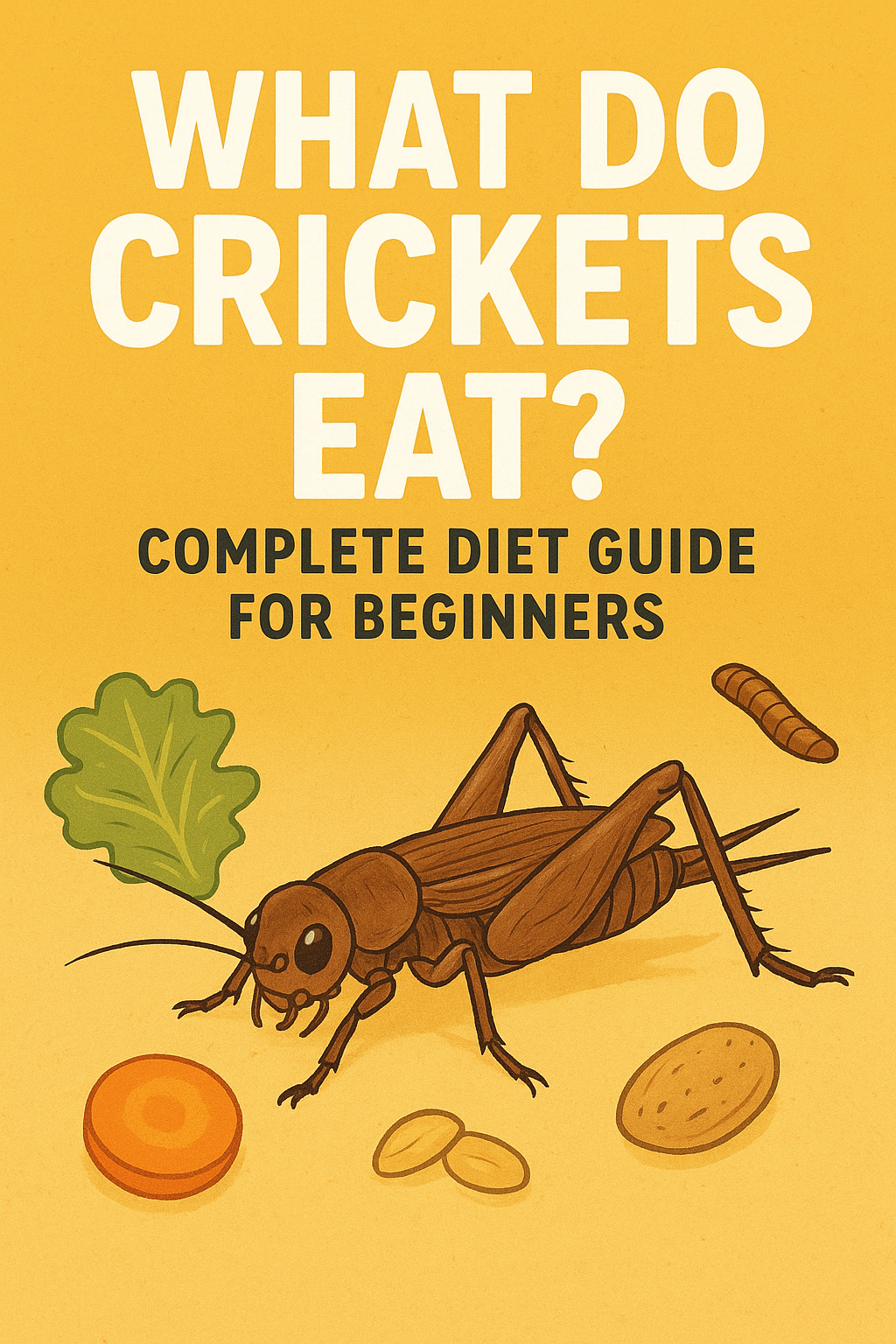

Crickets are omnivorous insects that will try almost any organic food. In general, crickets eat mostly plants – leaves, grasses, fruits and vegetables – but many species will also scavenge or prey on other insects. This guide explores what do crickets eat in the wild and in captivity. You’ll learn practical feeding tips and see how spider and camel crickets (a.k.a. cave crickets) fit into the picture. Whether you keep crickets as feeders or just found one in your yard, this guide answers all your questions.
Cricket Diet Basics
Crickets in the wild are generalist feeders. They munch on a wide range of organic foodstuffs, from plant material to insect remains. Key points about their diet: – Plants: Many crickets are largely herbivorous. They eat plant tissues like flowers, fruit, leaves, seedlings, grasses, and young plant shoots. For example, field crickets often feed on fallen fruit and tender leaves in grassy areas.
– Invertebrates: Some species include animal protein in their diet. Predatory crickets will consume insect eggs, larvae, scale insects, aphids and other small arthropods. This protein-rich diet helps them grow faster.
– Decaying Matter: Almost all crickets will scavenge dead organic material. They eat decaying plants, fallen leaves, wood debris and fungi. This helps recycle nutrients in their ecosystem.
– Food Storage: Crickets have powerful jaws for chewing and are sometimes known to be cannibalistic if food is scarce. In captivity, it’s common to see crickets eat dead mates or remain when overcrowded.
A Roesel’s bush cricket (genus Metrioptera) on a green leaf – an example of the foliage-based diet crickets enjoy.
In summary, what do crickets eat? The answer is “almost anything organic.” In the wild they’ll sample leaves, fruits, grasses and even small insects. A well-rounded diet of plant material and occasional protein keeps crickets healthy.
What Do Crickets Eat in the Wild?
Wild crickets forage on whatever food sources are available. Here are common natural foods for crickets:
- Seeds and Grains: Many field crickets eat seeds, helping regulate plant growth by consuming weed seeds.
- Green Plants: Tender plant shoots, grasses, and the leaves or flowers of weeds and garden plants. For example, they may chew grass blades or nibble on lettuce leaves.
- Fruits and Vegetables: Fallen fruit (e.g. overripe berries), cucurbit vines, or rotting vegetables provide sugars and moisture. A wild cricket in a garden might feed on damp fruit scraps.
- Decaying Organic Matter: Crickets are excellent scavengers. They break down fallen leaves, rotten logs and dead plant material, speeding up decomposition. Some even eat fungi or mold on decaying wood.
- Other Insects: When hungry, a cricket may turn predatory. They consume soft-bodied insect larvae, aphids or even other crickets if given the chance what do crickets eat.
This varied diet is why crickets are found in fields, forests, caves and even houses. In fact, studies note that “captive crickets are omnivorous; when deprived of their natural diet, they accept a wide range of organic foodstuffs”. They adapt to eat what’s around, from garden veggies to leftover pet food crumbs.
Feeding Pet Crickets (Gut-Loading & Diet Tips)
If you keep crickets as pets or feeder insects, you’ll want to provide a nutritious balanced diet. Commercial cricket food or gut-loading mixes are widely available, but you can also offer fresh foods. Key feeding tips:
- Commercial Diets: Many pet stores sell cricket chow or nutrient-rich formulas. These often contain grains, vitamins and minerals. The Spruce Pets recommends using prepackaged reptile “gut-loading” formulas or commercial cricket foods as a staple.
- Vegetables & Greens: Crickets love leafy greens and veggies. Offer dark lettuce (romaine, collards, kale) and vegetables like squash, sweet potato and carrot slices. These are high in vitamins and moisture. For example, the Spruce guide lists “dark leafy greens (romaine, mustard greens, kale, collard greens), squash, sweet potatoes, carrots” as good cricket foods.
- Fruits & Roots: Serve small pieces of fruit (apples, oranges, melons) and vegetable scraps (potato peels, cucumber). Oranges and apple chunks are tasty treats. Fruits provide hydration, which is crucial.
- Protein Supplements: You can add protein with tropical fish flakes or dry dog food. Interestingly, research shows crickets can thrive on dry dog food supplemented with lettuce.
- Gut Loading: If you feed crickets to reptiles or birds, “gut loading” ensures they pass nutrition along. Gut loading means feeding crickets extra nutritious foods 24–48 hours before they become prey. For example, give crickets high-vitamin foods or supplements, so your pet gets the benefits. As The Spruce notes, “gut loading simply means feeding the crickets nutritious foods so that the nutrition is passed on to your pet”.
Avoid Harmful Foods: Do not feed crickets moldy or rotten food. Mold introduces pathogens. Also avoid foods with pesticides, high salt, or anything citrusy in excess. (Many insect feeders warn that citrus or onion can harm feeder bugs.) Stick to fresh, clean produce.
Water and Feeding Practices
Crickets need moisture but can drown in deep water. Provide hydration via wet vegetables or sponges. Some keepers use water gels or place a moistened cotton ball in the cage. Also: – Feed multiple small dishes of food to prevent uneaten produce from molding. – Remove leftovers daily to keep the habitat clean. – A shallow dish of protein-rich pet food (flaked fish food) can serve as a balanced staple.
By offering variety and clean, fresh food, your crickets will be healthy and active.
What Do Spider Crickets and Camel Crickets Eat?
Spider crickets (family Rhaphidophoridae) – also called camel crickets or cave crickets – have similar omnivorous diets. They are opportunistic feeders found in cool, damp habitats. Key points about their diet:
- Omnivorous Scavengers: Spider/camel crickets eat a wide range of organic matter, including fungi, plant debris, and dead insects. In the wild, they consume fallen leaves, decaying wood, and fungi in caves or under stones.
- Occasional Live Plant Tissue: When necessary, they may nibble on live plant parts (especially tender shoots) for moisture.
- Human Habitats: Indoors, spider crickets raid basements and closets. They chew on fabrics, paper and food scraps. For example, they are known to make holes in clothing, cardboard boxes, or wallpaper. They may also eat leftover crumbs, cereal or pet food spills.
In short, what do spider crickets eat? Almost anything organic they find. Like most crickets, camel crickets are not picky. Their diet may even include fungus on walls, cardboard, or the occasional insect carcass. Managing them often means eliminating moisture and food debris to deter their scavenging.
Nutritional Value of Cricket Diets
Crickets efficiently convert food into body mass, which is why they’re such effective feeders. In fact, crickets “are efficient at converting their food into body mass, making them a candidate for food production”. This high feed-conversion ratio means they can grow quickly on a modest diet. Key nutrients in a cricket’s diet include: – Protein: Sourced from both plant materials (some leaves and seeds) and any insect prey.
– Carbohydrates: From fruits, grains, and vegetables provide energy.
– Vitamins & Minerals: Especially calcium and vitamins from dark greens. Many keepers dust cricket food with calcium supplements to aid egg-laying and prevent deficiencies in pets that eat them.
Overall, a balanced diet with protein, fiber, and moisture keeps crickets active and reproducing. If crickets lack nutrition, they become weak and die quickly (remember, their lifespan is only a few weeks).
FAQs: Cricket Diet Questions
Q: What do crickets eat in captivity?
A: Pet crickets thrive on a mix of commercial cricket chow and fresh foods. Feed them a variety of grains, vegetables and fruits. Good choices include leafy greens (lettuce, spinach), carrots, apples, and a high-protein bite like fish flakes or dog food. Always provide moisture (e.g., a damp paper towel or water gel) and remove uneaten food daily.
Q: What do crickets eat outside?
Q: Do crickets eat meat?
Q: What do crickets eat spider?
Q: What do crickets eat camel ?
Q: How often should you feed pet crickets?
A: Provide fresh food daily. Young crickets (nymphs) eat constantly as they grow. Place multiple small dishes of food so all crickets get a share. Remove old food after 1–2 days to prevent mold. With clean, consistent feeding, pet crickets will thrive.
Q: What not to feed crickets?
Key Takeaways
- Omnivores: Crickets eat plants, fungi, decaying matter and sometimes other insects. They adapt to available foods.
- Variety is Best: For pet crickets, offer a mix of greens, veggies, fruits and protein.
- Spider/Camel Crickets: These cousins scavenge similar foods – they even chew fabrics and paper indoors.
- Avoid Mold: Never feed spoiled or moldy foods to your crickets.
- Gut Loading: If crickets are fed to reptiles, pre-feed them nutritious food to boost their value.
Understanding what do crickets eat helps you keep these insects healthy – whether you’re a hobbyist feeding reptiles, a gardener curious about yard pests, or an insect enthusiast. By providing a balanced diet and clean conditions, your crickets will be active and well-nourished More post.
Did this guide answer your questions about cricket diets? Share this article with fellow pet enthusiasts or leave a comment below with your own cricket-feeding tips!
